Unknown History Archive · Casebook Vol. 1

The Paper Trail · A plain-English guide for veterans’ families

There may be a file in St. Louis with your father's name on it. Here's how to ask for it.

The Army, Navy, Marine Corps, Air Force and Coast Guard kept a file on everyone who served, and most of those files sit in one building. The Paper Trail shows you, step by step, how to request a veteran's file, replace lost medals, find where the unit was, and search the prisoner-of-war and missing records. Much of it costs nothing for veterans and their families, and the book tells you exactly what doesn't.

PDF e-book · regular and large-type versions · instant download · 14-day refund

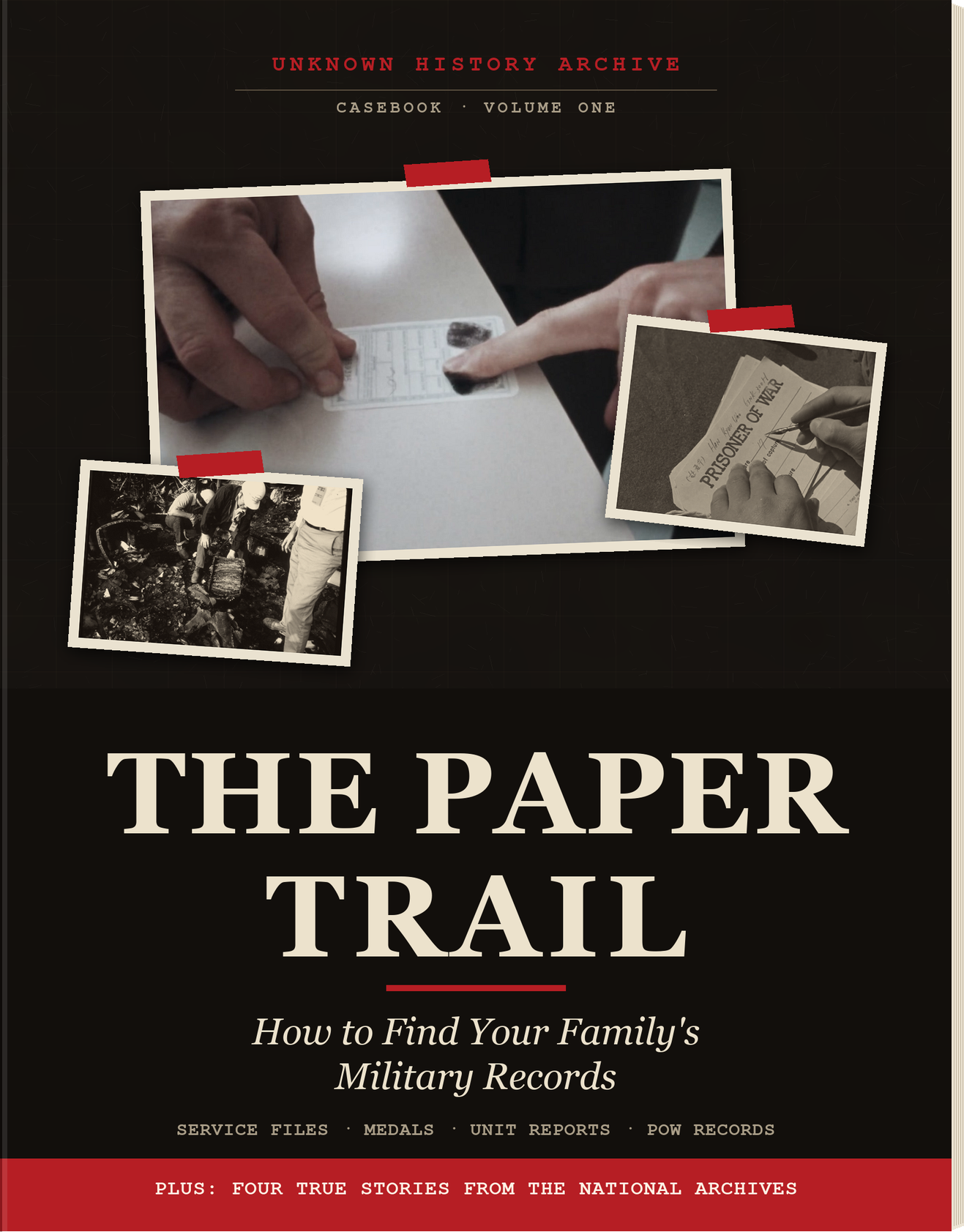
The Paper Trail: How to Find Your Family's Military Records, book cover
16–18 millionmilitary personnel files destroyed in the St. Louis fire of July 12, 1973
4,000–5,000requests reach the St. Louis records center every day; the book shows how to make yours easy to find
$0for the veteran or next of kin if the discharge was less than 62 years ago (in 2026: after 1964); older files cost $25–$70
4,714American prisoners of war in one Korean War database you can search online

Why families never ask

Three reasons families never ask for the file, and why none of them should stop yours.

"It must cost money."

For veterans and next of kin, the file is free if the veteran was discharged less than 62 years ago (in 2026, after 1964). For earlier discharges, which covers World War II and Korea, a copy costs $25 to $70 whoever asks. The book shows who counts as next of kin and what each request costs.

"His file burned."

The 1973 fire destroyed about 80 percent of the files of Army soldiers discharged between 1912 and 1960. The book explains how burned files are rebuilt, and exactly what to send so it can happen.

"I wouldn't know where to start."

One checklist, one government form, one sample letter you can copy. The main request, for the file itself, works on paper or online, whichever you prefer.

By the end of one evening

You'll know what to ask for, where to send it, and what to do while you wait.

  • A records request filled in and signed the way the Archives asks, ready for the mailbox
  • A plan for replacing lost medals, with the right office for each branch of service
  • Where to find the unit's morning reports and the ship's deck log, and which ones you can read online tonight
  • A search of the National Archives' prisoner-of-war and casualty databases
  • A grave search, and what to try when it comes up empty
  • A family story written down before it's lost
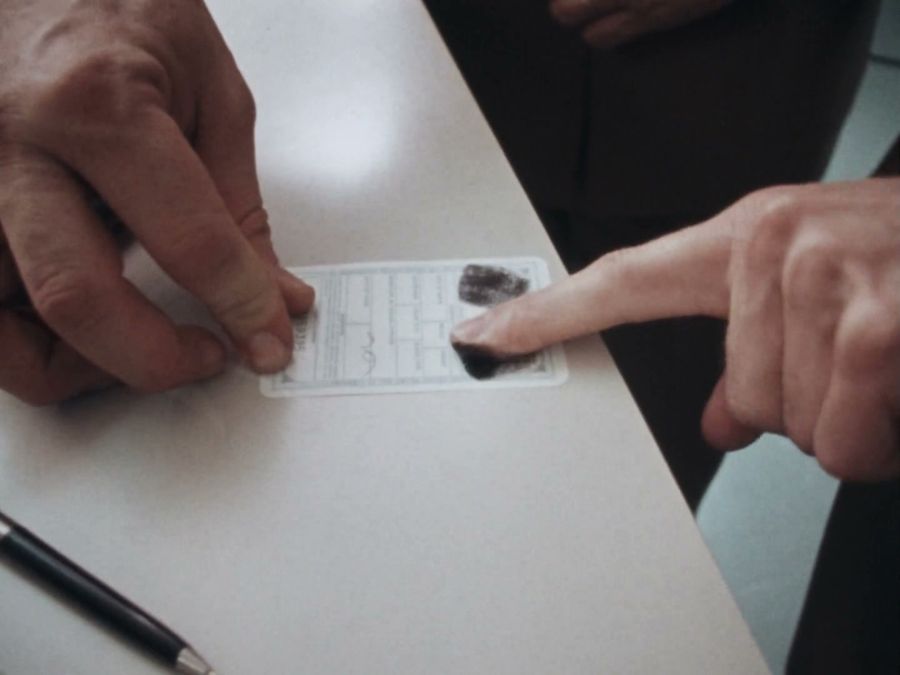
Hands pressing a fingerprint onto a card, 1973
A returned prisoner of war's fingerprint card, Naval Hospital Jacksonville, 1973. Frame from a Department of Defense film, National Archives.

What's inside

Eight chapters that do the work. Four true stories you will not find on the channel.

Part One · The Paper Trail

  1. What your family can getWhat's in a service file, who may ask, the 62-year rule, and the real costs
  2. Asking for the fileThe online route, the paper form (SF-180), what to write, and when to check back
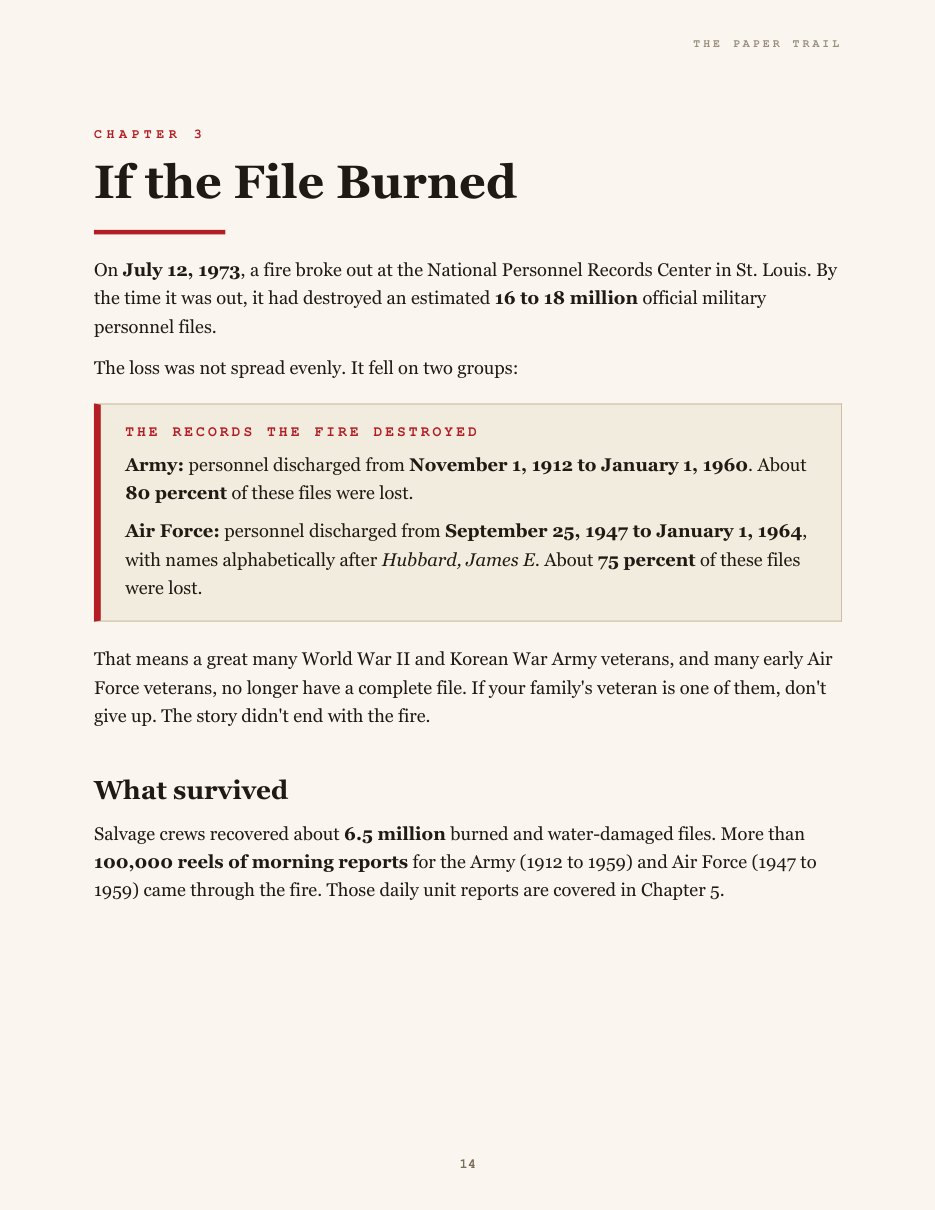
  3. If the file burnedThe 1973 fire, what survived, and how a lost file is rebuilt
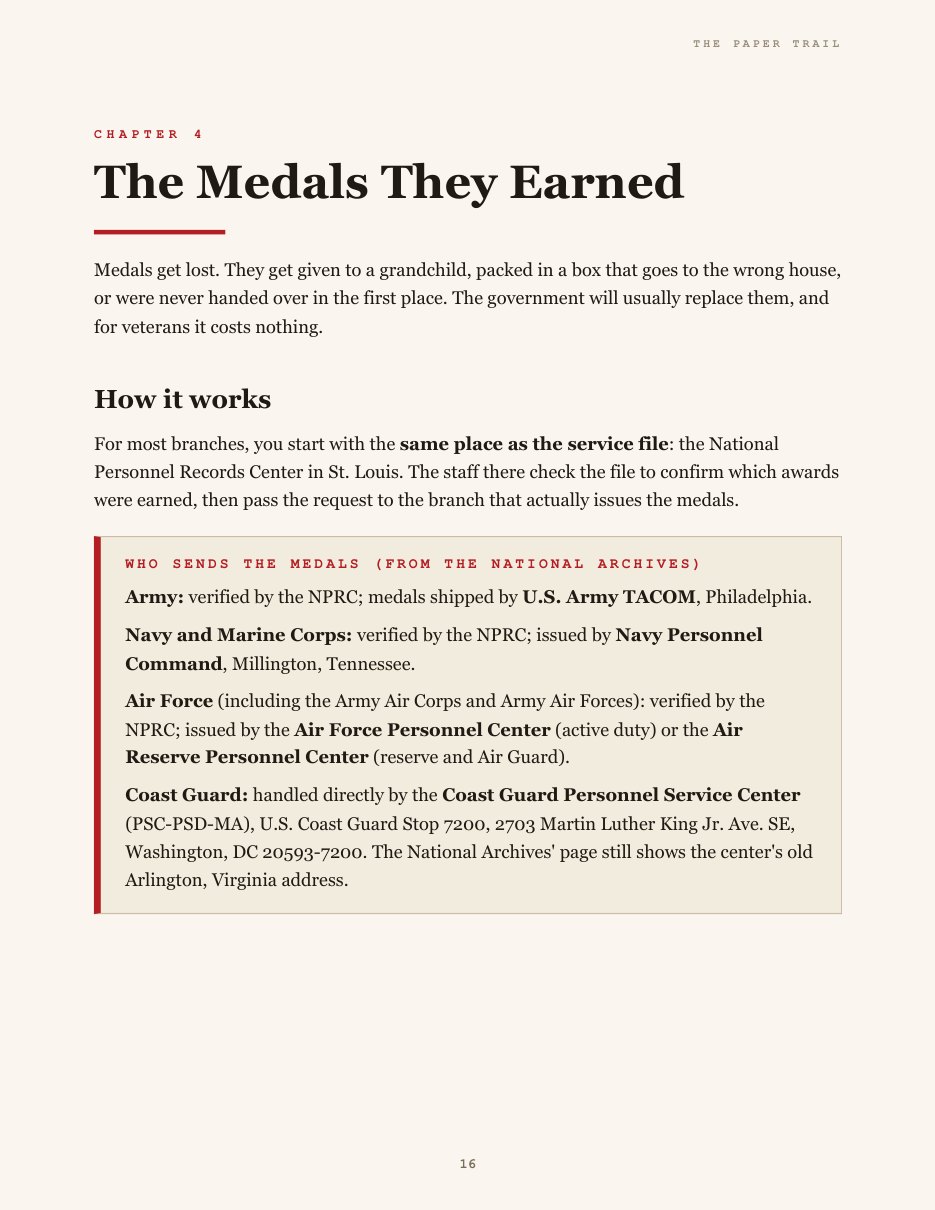
  4. The medals they earnedReplacement medals, free in most cases, and which office handles each branch
  5. Where were they?Morning reports, Navy deck logs, ship histories and Air Force unit histories
  6. Prisoners of war and the missingThe online POW databases, DPAA, and family DNA samples
  7. Where they restThe VA gravesite search, its limits, and what to try next
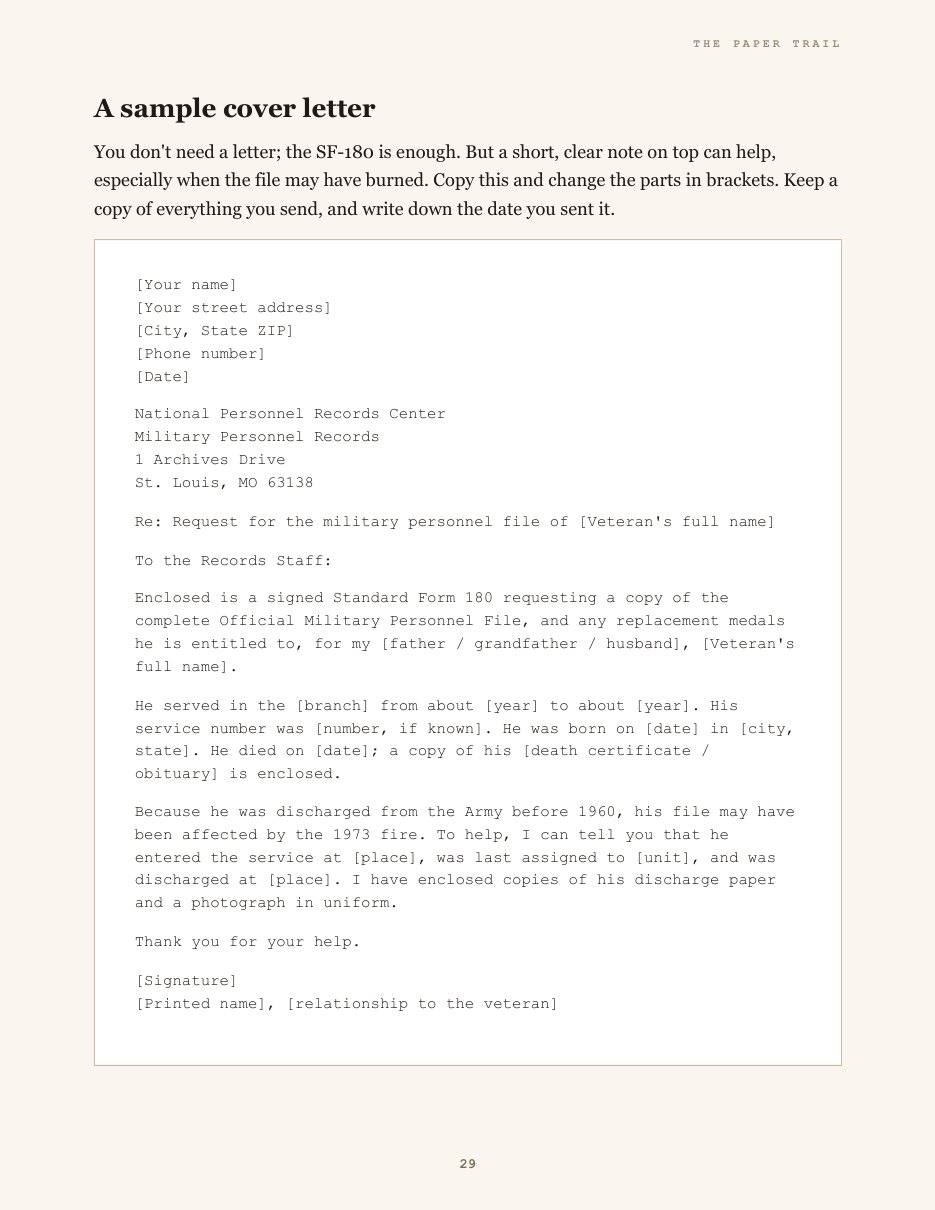
  8. Your checklist and a sample letterEverything on one page, and a letter you can copy

Part Two · The Casebook

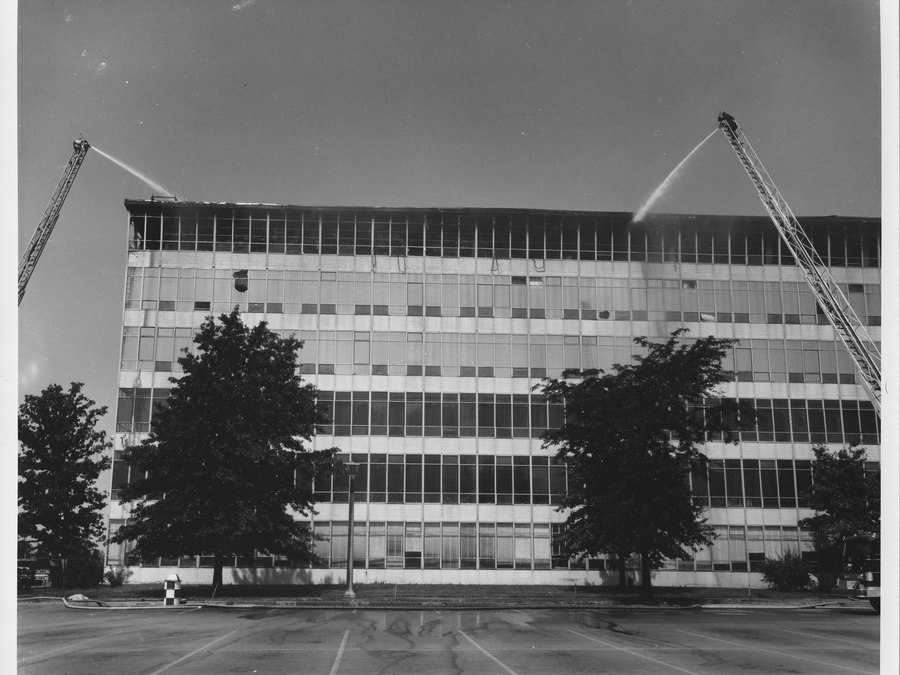
Firefighters at the records center, 1973
St. Louis · 1973The Night the Files BurnedThe fire that destroyed 16 to 18 million service files, and how they are rebuilt
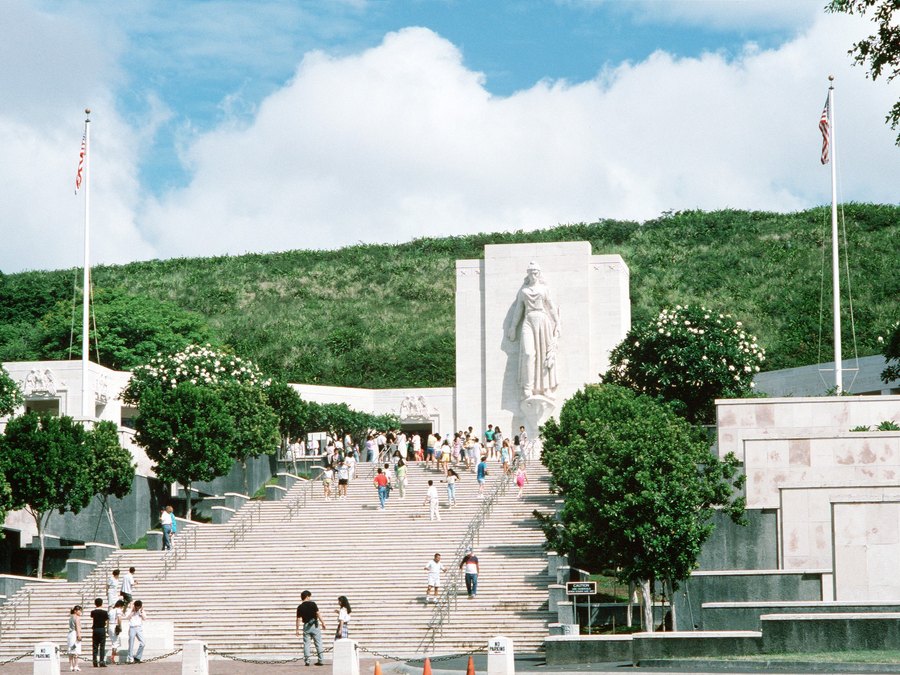
The National Memorial Cemetery of the Pacific in Honolulu
Korea · 1954The Boxes That Came BackOperation Glory, the unknowns of the Punchbowl, and the names found seventy years later
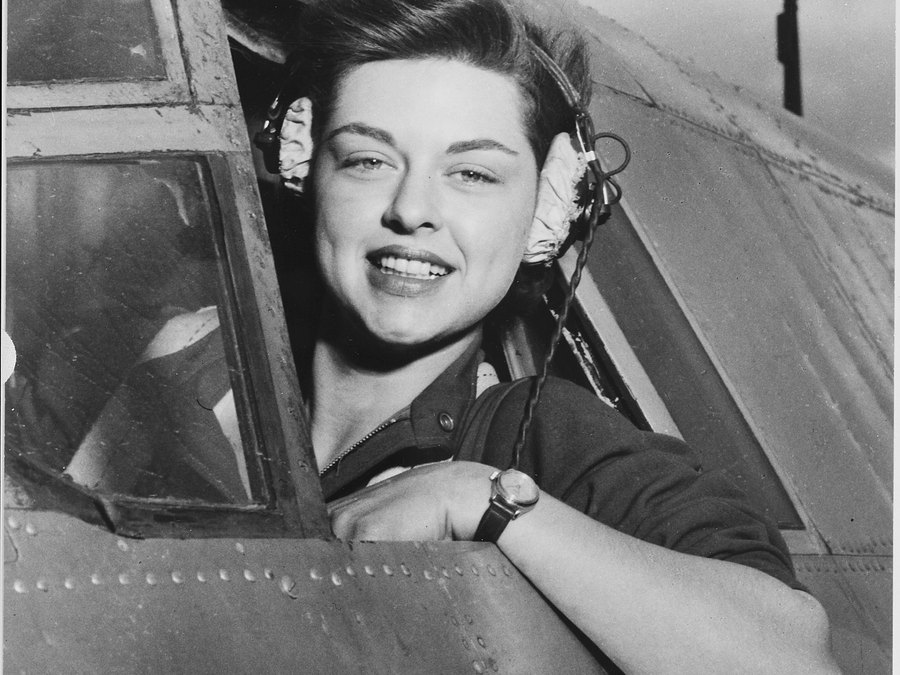
A WASP pilot at the controls of a bomber, Texas
1942–2016The Pilots Who Were Not Veterans1,074 women flew for the Army Air Forces as civilians, and had to fight to be called veterans
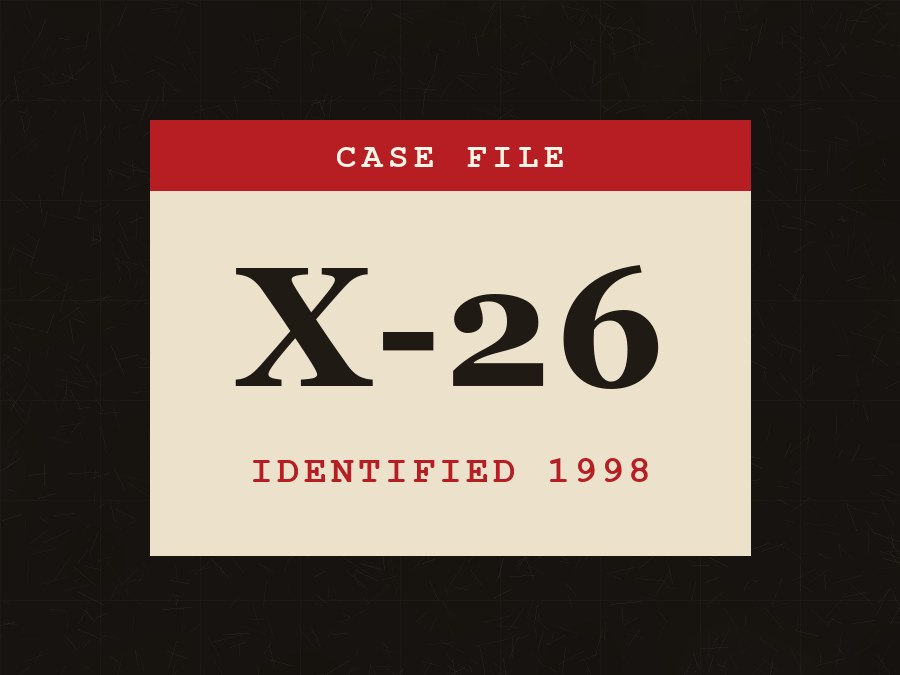
A case-file card reading X-26, identified 1998
Vietnam · 1972–1998The Unknown Who Had a NameThe Vietnam Unknown at Arlington, and the paperwork and DNA that named him

None of these four is on our YouTube channel. Every one comes with a timeline, the records you can look up yourself, how to tell whether your family was part of it, and where to see it today.

Look inside

Large, clear type. Real photographs. Every source listed at the back.

Actual pages from the regular edition. A large-type version of the same book, with bigger letters, is included with every copy. Click any page to read it at full size.

Page from chapter 4: The Medals They Earned
Chapter 4 · replacement medals
Page from chapter 3: If the File Burned
Chapter 3 · the 1973 fire
Page with the sample cover letter
Chapter 8 · the sample letter
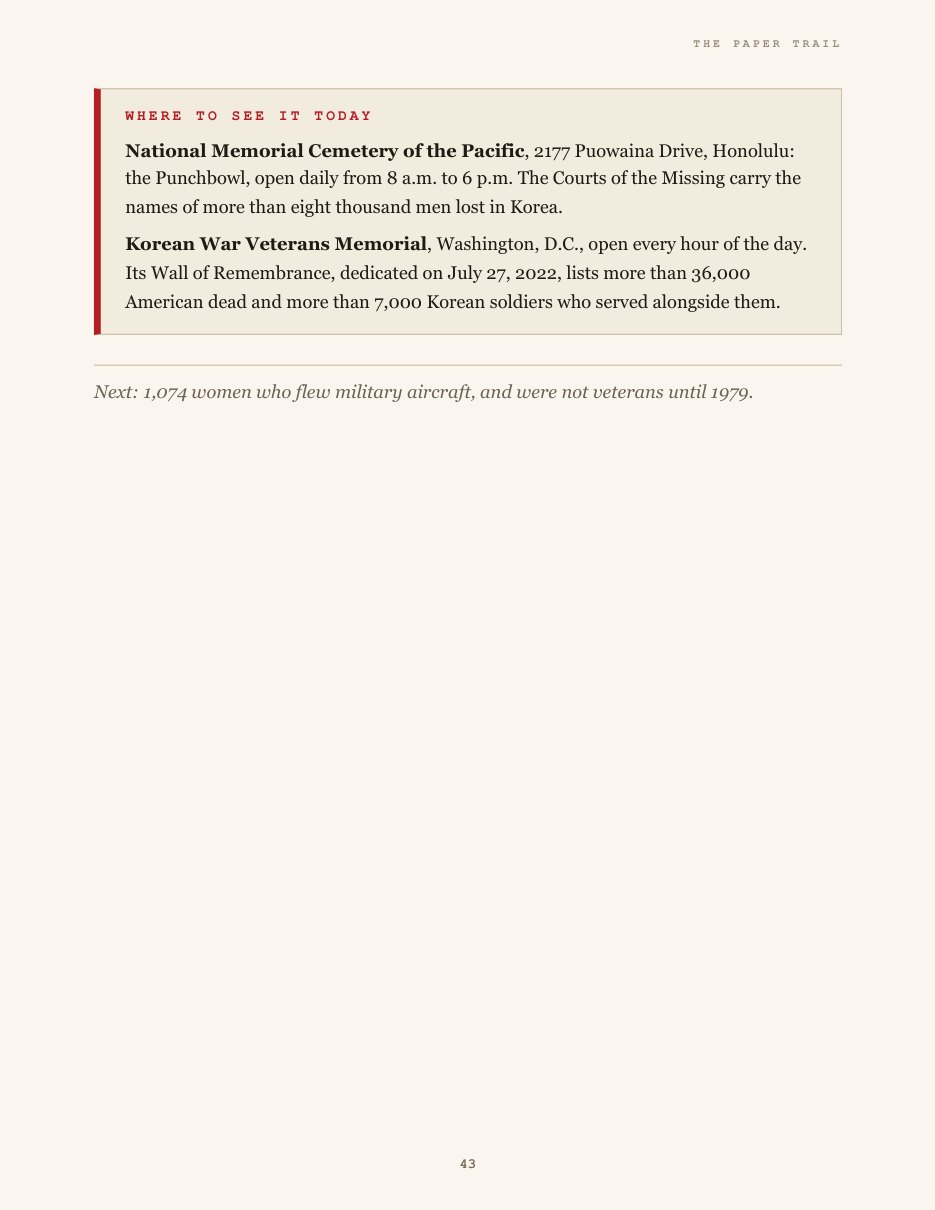
Page from Case Three about the women pilots
Case Three · the women pilots

Chapters 1 and 2: what is in a service file, who may ask for it, what it costs, and how to send the request. It comes from Gumroad: type 0 in the price box, enter your email, and the PDF is sent to you.

One book, one price

Pay once. Download right away. Keep it for good.

Everything comes in the one download: the book in regular type, the same book in large type, and the printable workbook.

Launch offer · first 100 readers

Use code FIRST100 at checkout for $5 off. The code stops working after 100 uses.

14-day money-back guarantee

For any reason: email us at within 14 days of buying, and we'll refund you in full.

Secure checkout by Gumroad, by credit or debit card. Sales tax is handled at checkout. Right after paying you'll see your download links, and Gumroad emails them to you as well; the files stay in your Gumroad library, so you can download them again any time.

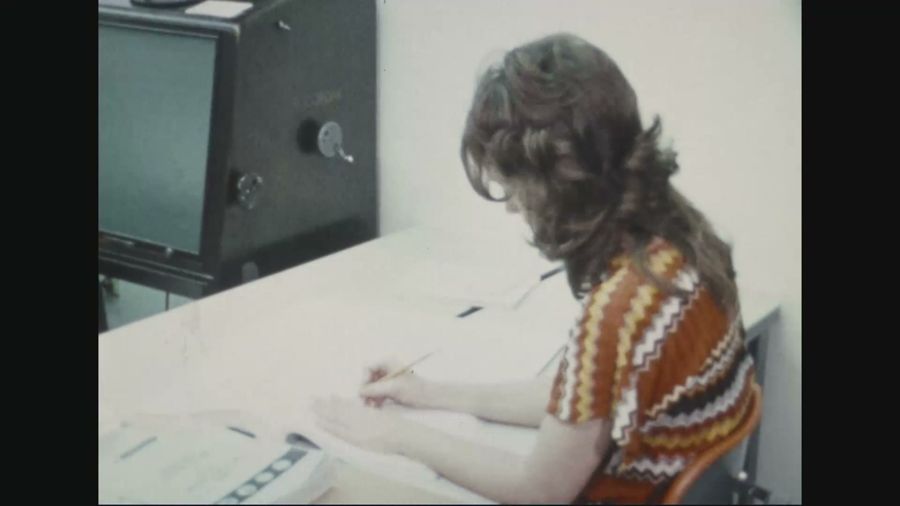
A records clerk at work, seen from behind, 1973
Staff at the Center for Prisoner of War Studies, San Diego, 1973. Frame from a U.S. Army film, National Archives.

Who made this

From the makers of Unknown History Archive

Unknown History Archive is a YouTube documentary channel built on real film from the U.S. National Archives: the atomic test town of 1953, the Korean War prisoner exchange, and the Vietnam POWs who came home in 1973. This book is for the viewers who watch those films and think of their own father's service.

We researched every step on the official government websites, wrote it in plain English with the help of AI tools, and checked it by hand against those sources. Every source is listed at the back, so you can check it too.

We are not part of, or endorsed by, the National Archives or any government agency, and we don't submit requests for you. The book shows you how to use the government's own services, and says which ones cost money.

Questions

Before you buy

Is this an official government publication?

No. It's an independent guide made by Unknown History Archive. It explains how to use services the National Archives, the VA and the Defense POW/MIA Accounting Agency already offer, and it tells you which of those services are free.

Can't I find this information free online?

Yes, and the book says so. Every official page it relies on is free, and all of them are listed at the back. What the book adds is order and plain English: which step comes first, what to write on the form, what to do if the file burned, and where to look while you wait, in one place and in large print.

I'm not good with computers. Will this work for me?

Yes. The two requests that matter most, the service file and replacement medals, are made with one paper form (the SF-180), an envelope and a stamp. A few of the extra searches, such as the prisoner-of-war databases and the grave locator, are websites; the book gives you the exact page name to type in, and a son, daughter or librarian can run each one for you in minutes. The large-type version, with bigger letters, is included with every copy, and it prints cleanly at home.

What format is it, and how do I get it?

It's an e-book: PDF files, delivered right after checkout by a download link and an email from Gumroad. They open on a phone, tablet or computer and print on standard US letter paper. Nothing is shipped by mail.

Which wars does it cover?

The records process is largely the same across the 20th century. The book has specific help for World War II, Korea and Vietnam veterans, including the 1973 fire, the prisoner-of-war databases and Vietnam-era Navy deck logs.

My father's file burned in 1973. Is there any point?

Yes. The National Archives rebuilds the basic facts of a burned file from other records, such as pay vouchers, VA claims and Selective Service records. Chapter 3 explains what to send to help it along, and where else a discharge may have been recorded.

What if it isn't for me?

For any reason: email us at within 14 days of buying, and we'll refund you in full. Refunds go back to the card you paid with.

Is there a printed book?

Not yet. The PDF prints on ordinary US letter paper, and the large-type version is made for that. If we publish a paperback, we'll announce it on our YouTube channel.

What if an address or fee changes?

We re-check every official source once a year. If an address, fee or rule has changed, we correct the e-book, and everyone who bought it gets the corrected file free in their Gumroad library.
The Paper Trail · Casebook Vol. 1

His records may be waiting in St. Louis.

PDF e-book in regular and large type, with the printable workbook. Instant download, 14-day refund. Start tonight with one form and one envelope.

The Paper Trail$19 · instant PDF
Get it